
When we — family and friends — sat down to eat Thanksgiving dinner, my 9-year-old grandson asked when we were going to get to say what we were thankful for this year.
I hesitated, just for a second.
I mean, what exactly are we thankful for since Donald Trump won another term in the White House and then nominated a bunch of crazies and/or sycophants to run/destroy American institutions? Or even worse, possibly bringing down small-d democratic guardrails now that Trump has basically embraced Project 2025, or its authors anyway?
But then I said, “Of course, we’re going to say what we’re thankful for,” because who wants to crush the soul of a 9-year-old, even one who understands just enough about the world to know the danger that a Trump restoration represents.
So, in turn, we said what we were grateful for. I started. I talked about family and good health and friends and the joy we take in seeing and helping one another. I didn’t say a word about politics.
And no one else at the table did either.
This silence on the news — which was definitely unusual among my family and friends, who include accused “vermin” and “enemies of the people” and “poisoners of blood,” although no barbecuers of people’s pets — told me at least three things.

Want early access to
Mike’s columns?
Subscribe to get an
exclusive first look at
his columns twice a week.
Talking about the news, and especially the political, can be dangerous, even among friends and family.
Not talking about the news — not reading it, not viewing it — can be even more dangerous. We know about the rapid decline of newspaper circulation and even local news viewership. We know about the contagion of election denial. We know about the existential rise in misinformation, and maybe even worse, disinformation — especially from Trump’s pal Putin — and the expanding role of fake-news AI in generating both.
Can we afford not to know more about these toxic threats?
But, more to the point in 2024, the news is just too damn depressing to talk about, to read about, to watch on TV. It’s more than politics. It’s more than Trump. It’s the victims in Gaza. It’s the war in Ukraine. It’s the pictures of the desperate in North Carolina. It’s understandable. It’s inevitable. But think about where it goes.
For those looking to resist the worst of a new Trump administration, I have more bad news. What I expect/fear is less resistance and more withdrawal.
And if you’re either a journalist like me or just a person who cares about being well informed, the fact that so many people have basically stopped, or at least tried to stop, reading/watching the news is not only painful, but maybe just as dangerous as Trump himself.
The trend of not reading/watching so-called mainstream news is nothing new. The trend lines are unmistakable. According to a 2023 count, we have lost one third of our newspapers — including the late, great Rocky Mountain News — and a startling two-thirds of newspaper journalists since 2005. Even the biggest newspapers, with the richest owners, have laid off journalists in large numbers. Many of the recently great regional newspapers are only shells of themselves.
Another unmistakable trend line involves hyperpolarization, on the internet and on cable news, the roots of which you can trace back at least as far the Gingrich-Limbaugh era. And now, with the choice of so many narrowly targeted sites, many readers/viewers have decided to treat their consumption of news as so much comfort food, wanting to hear and see only what they want to hear and see.
But since the Trump election, the trend, particularly among liberals, has accelerated the decline of the consumption of news, and pretty dramatically. I have evidence of this even from my journalist-loving family. My daughter, the law professor, says she gets most of her news about Trump and MAGA from reading my column. That’s nice, but maybe not sufficient. My partner, the psychotherapist and avid reader of the news, says she wants to hear about politics these days only on a need-to-know basis.
It’s out there. In fact, it’s everywhere you look. When Jeff Bezos, who owns the Washington Post, blocked the paper’s editorial page from endorsing Kamala Harris, as many as 250,000 readers unsubscribed. People often unsubscribe when a newspaper story angers them. And many resubscribe when missing the news trumps the pleasure of boycott. I’m not sure the Post should expect that, though.
The anger toward Bezos is not just about a story, but also about the growing influence of the new oligarchs on American society, which may be the greatest since the Gilded Age of Rockefeller, Morgan, Ford, et al. But cutting off a news source as valuable as the Post simply to register dissatisfaction with Bezos, whose fortune won’t be hurt at all, is a blow to democracy.
Those oligarchs include, of course, Elon Musk, who has turned X/Twitter into a right-wing cesspool as he becomes, depending on how you view it, either Trump’s BFF (best friend forever) or OFF (only friend forever).
We’ve seen the move of liberals away from X, from which hundreds of thousands have unsubscribed. And we’ve seen the concurrent move to Bluesky, which many more have embraced, and in record numbers. For me, going to Bluesky (you can find me at
@mlittwin.bsky.social) is more like a return to what Twitter used to be when it was something resembling, if you used it for that purpose, a marketplace of ideas. For others, it’s simply a statement.
Meanwhile, the ratings for MSNBC, the favored network of many liberals and other Democrats, have plunged since Trump’s victory. There’s usually a falloff in viewers following an election. Since the day before the election, MSNBC’s have fallen by 53%. CNN’s ratings have fallen nearly as much. And whose ratings do you think have held steady? I’m sure you can guess.
Trump won bigly among what they call low-information voters, and especially in areas where newspaper circulation is in decline. As Trump was caught saying, “I love the poorly educated.”
I’m going to go out on a limb here and say that information — especially for those of us who accept the notion that truth is unbiased — is necessary to the health of the American public.
There’s the oft-quoted line from Thomas Jefferson — no, I’m not referencing the one about life, liberty and the pursuit of happiness, or the one about the separation of church and state or even the greatest one about all men being created equal, although all of them are important — about newspapers, with which, like most presidents, he had some trying moments.
He was referring to the danger of the 1798 Alien and Sedition Acts, supported by John Adams. The present-day danger is in Trump’s threatened use of the Acts, for the first time since FDR and Japanese internment, in support of using the military in deporting migrants.
The quote:
“The basis of our governments being the opinion of the people, the very first object should be to keep that right; and were it left to me to decide whether we should have a government without newspapers or newspapers without a government, I should not hesitate a moment to prefer the latter.”
In today’s world, Jefferson wouldn’t just mention newspapers. There are, of course, news sites, and we at The Sun definitely appreciate your support. There are radio and TV and Bluesky and Facebook and public radio or even a wide range of podcasts, which are apparently thriving, and, most important, the news media of your choice, even those with opposing views.
The danger isn’t just about the growth of misinformation and disinformation.
Turning off the news dramatically increases the danger of not knowing enough — or maybe not knowing much of anything — about the toxic information that one must understand as a good citizen upholding democracy.
That’s for our own good and especially, thinking back to the ask-not John Kennedy quote, for the good of the country.
Maybe by next Thanksgiving.

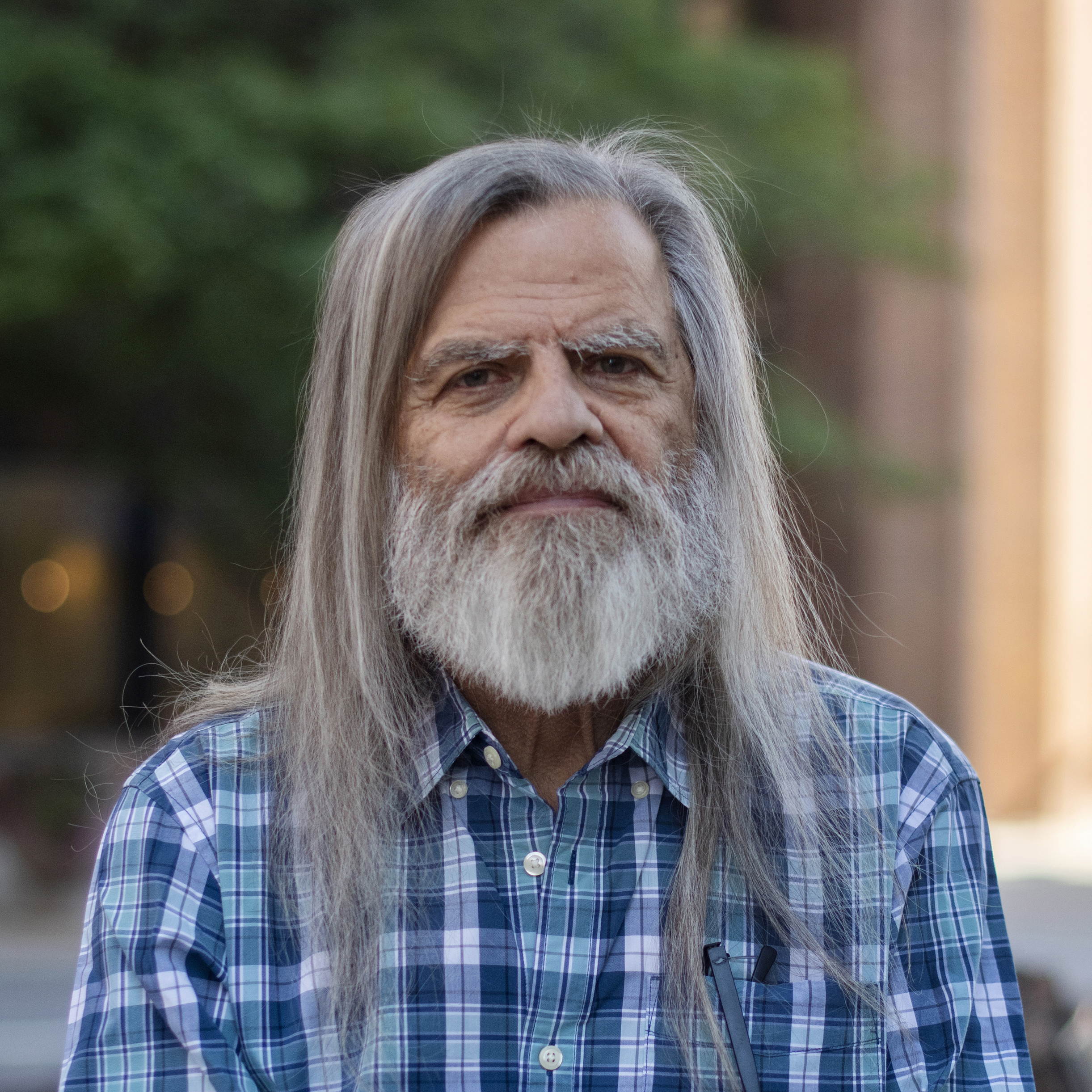
Mike Littwin has been a columnist for too many years to count. He has covered Dr. J, four presidential inaugurations, six national conventions and countless brain-numbing speeches in the New Hampshire and Iowa snow. Sign up for Mike’s newsletter.
The Colorado Sun is a nonpartisan news organization, and the opinions of columnists and editorial writers do not reflect the opinions of the newsroom. Read our ethics policy for more on The Sun’s opinion policy. Learn how to submit a column. Reach the opinion editor at opinion@coloradosun.com.
Follow Colorado Sun Opinion on Facebook.