

You don’t need a political science degree or to have worked in government to know that our political systems are failing us — and that our democracy is losing its effectiveness and credibility at a dangerous pace.
On an almost daily basis, there are countless headlines — from Washington, D.C., and closer to home in Colorado — signaling as much.
Facing unrelenting attacks from the head of the Colorado Republican Party, U.S. Rep. Ken Buck (R-Windsor), who until recently was the darling of right-wing conservatives throughout the state, decided not to seek reelection in the 4th Congressional District, noting that “too many Republican leaders are lying to America” and that “it’s time to stop feeding popular narratives and start addressing the long-term solutions.”
Republicans who have promised to secure the border and cut the debt for 20 years have accomplished neither, Buck noted in disgust. (In late December, facing a credible primary challenge and a rematch against a competitive Democratic challenger, Rep. Lauren Boebert decided moving is easier than moderation and announced she would abandon her reelection bid in CD3 and run instead in the more conservative CD4).
On the other side, state Reps. Ruby Dickson (D-Greenwood Village) and Said Sharbini (D-Commerce City) recently resigned from the legislature, in part, because of the vitriolic environment. Their resignations come on the heels of a series of embarrassing and profanity-laced outbursts in the chamber by a member of the Democratic caucus during a special session on property taxes.
These examples are part of a much larger pattern of democracy in decline that demands we do more to limit political extremism and the outsized influence of some party insiders.
A set of constitutional amendments proposed for voter consideration in 2024 provide the opportunity for Colorado to once again be a national leader when it comes to common-sense reforms to increase democratic participation and improve our elections.
The formulation of these ballot measures is simple: give voters more choices in the primary, give voters more choices in the general election, and loosen the grip of the extreme fringes of both parties at all points of the election process.
If, like us, you are sick and tired of voting for the lesser of two evils, you’ll celebrate these changes.
Indeed, we support the reforms because they put the interests of voters first and can help break the stranglehold that hyper-partisanship has on our elected representatives and their ability to come together to actually get things done.
It’s too early to know exactly what will be put before voters, but the measures strive to meet a worthwhile goal in a state where nearly 50% of voters identify as independents: Taking on a system constructed by and for the benefit of the red-and-blue duopoly and giving all voters equal access to all phases of elections instead.
Two problems undermining the foundation of our elections and the representativeness of their outcomes can be found in partisan primaries that are off-limits to too many voters who might otherwise participate and in multi-candidate elections where someone can win with less than a majority of the vote. Those problems are made worse by outdated and undemocratic electoral architecture, including party caucuses and appointment via vacancy committees.
The end result? Too often it’s suppressing the will of the majority of voters — all while dampening participation, distorting representation, and fueling political division and dysfunction.
The proposed constitutional amendments would address the problem by ensuring all voters have equal access to all elections. Specifically:
- all voters would have equal access to a unified, all-candidate primary — with the top four candidates advancing to a majority-winner general election;
- all voters would have access to decide which candidates may qualify for the primary;
- and all voters would have equal access to vacancy elections.
Political parties will still have an important role to play in recruiting, endorsing and supporting candidates. This proposal simply ensures that an election system funded by all taxpayers and administered by the government serves the public interest first and foremost.
Colorado has a history of efforts to modernize and improve our elections. In the past 10 years, Colorado has implemented a secure vote from home, opened party primaries to more than 1 million unaffiliated voters and curbed the practice of partisan gerrymandering by establishing independent redistricting commissions. Each was viewed early on as a challenge to the status quo and critiqued as being complicated and unnecessary. Today, each is embraced by the majority of Coloradans.
Given our experiences as elected officials, we do not want this to be read as an attack on the intentions of many well-meaning Democrats and Republicans, but know we can — and must — do better.
The proposed constitutional amendments promise to give all Coloradans a voice and vote that really matters in our elections at a time when citizens are growing increasingly disillusioned by the choices on their ballot and by the divisiveness in our politics.
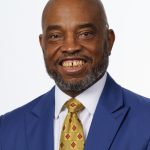
Terrance Carroll is a Democrat from Denver who served in the Colorado House of Representatives from 2003 through 2010, including as House Speaker. Colin Larson is a Republican from Jefferson County who served in the Colorado House of Representatives from 2019 through 2022.
The Colorado Sun is a nonpartisan news organization, and the opinions of columnists and editorial writers do not reflect the opinions of the newsroom. Read our ethics policy for more on The Sun’s opinion policy. Learn how to submit a column. Reach the opinion editor at opinion@coloradosun.com.
Follow Colorado Sun Opinion on Facebook.