
As I’m sure your inbox can tell you — if inboxes could, you know, talk — this is the time of year when nonprofits make their fundraising asks. It’s the most critical time of the year for many of them, including your Colorado Sun.
Journalists generally don’t like to make asks, but when the stakes are so high in our country, as they are today, I’m happy to join my Sun colleagues in explaining just how important readers are to the project — and to me, personally.
Readers are obviously essential to all newspapers and news sites. But at The Sun, it’s a little different. We emerged from the ashes of a still slowly dying Denver Post to offer an alternative for delivering news critical to Colorado. We started with 10 journalists, seven years ago, and now we have nearly 30 employees. With your help, we can continue to grow. Or to put it more bluntly, without your help, we can’t continue to grow. You are the lifeblood of The Sun.
With the Post owned by vulture capitalists — more on that later — with local TV news under assault by profits-first, journalism-last conglomerates, and with local newspapers across the country dying, you can turn to the nonprofit Sun for free and independent and, most of all, truth-seeking and truth-telling journalism. That’s why I feel comfortable asking you to consider becoming a member or giving a one-time gift.
As a columnist, I speak directly to readers, and if readers didn’t take part in that conversation, I wouldn’t have a job. Which means I couldn’t keep doing what I’ve loved doing for more than 50 years — 28 of them in Colorado, at the Rocky, the Post, the Colorado Independent and now The Sun. I could give you many examples of why readers matter to me, but there is one that stands above all the others.

As some of you may remember, I wrote a column celebrating the life of my wife, Susie, after her death from Alzheimer’s in 2019. It took me six months to write that column. I was completely blocked. We were married for 49 years, and her disease and her death left me in a deep depression — about Susie’s passing and also about America’s willful ignorance of the mental and financial costs of the disease, which Medicare barely covers.
In those six months, it was painfully difficult just to write my regular columns — but writers write, and so I did — and then I had a breakthrough, like something out of the movies, and I wrote 3,000 words in about three hours in a burst of inspiration, born of desperation.
And then came the miracle.
Readers wrote to me, hundreds of them a day, then dozens more for days on end. Readers who celebrated Susie’s life with me. Readers who told me how much that column — and my columns generally — meant to them. It’s not an exaggeration to say that that response saved me. It helped me to begin the long road back to my life.
Do readers matter? More than I can say.
Which brings me to the second part of this column. Which is also about the state of the news today, which is to say, dire. There’s a documentary now streaming for free on PBS called “Stripped for Parts: American Journalism on the Brink.” It addresses, in part, Alden Global Capital’s rapacious acquisition of distressed newspapers, including The Denver Post, and stripping the papers first to their bones, then to the marrow and then, in many cases, just letting them die.
But not before turning their investments into a real estate racket, selling off iconic newspaper buildings, often set in the beating hearts of cities and towns, and exiling the remaining journalists to the boonies.
If you’re at the Capitol or City Hall, you can see the Denver Post name atop the building across the street. It is the perfect location for a newspaper. But what’s left of the Post isn’t there, just the name. The pretense of the name on the building is Alden’s pretense that journalism matters to them. It does not, as “Stripped” tells in great detail.
(Note: The Post journalists, with a newsroom just one-fifth the size of when I worked there, do the best they can to still produce good journalism. Just not enough of it. Not nearly enough of it. This sad trend is not limited to Colorado. Since the heyday of newspaper journalism, there are now 60% fewer journalists across the country. Since 2005, nearly 3,500 newspapers have closed shop. More than half of newspapers are owned by chains. And only 15% are individually owned.)
“Stripped” is a tragic story for the newspapers that have gone out of business and for the readers who now live in news deserts, for journalism and journalists, but mostly for the cost to America, where the proliferation of disinformation and misinformation has left citizens with no idea whom to trust, where vast news deserts leave readers with no one covering their local news or keeping an eye on their local politicians.
Former Post editor Greg Moore and Sun publisher Larry Ryckman, who worked at the Post for years, have central roles in the documentary. Ryckman poignantly says, “The Denver Post isn’t dying. It’s being murdered.”
The documentary stirs many emotions for me, remembering former Post editorial editor Chuck Plunkett’s famous revolution, calling for Alden to either respect journalism or to sell the Post to someone who will. Moore calls Plunkett’s revolt one of the most courageous things he’d seen over his lifetime in journalism.

Want early access to
Mike’s columns?
Subscribe to get an
exclusive first look at
his columns twice a week.
Alden didn’t fire Plunkett immediately. The story of the Post revolution was too big, becoming front-page news at even the New York Times, to fire him. But the bosses eventually killed a Plunkett column criticizing Alden, causing him to quit, saying, “Our obligation is to the reader and the truth. We should not be allowing ourselves to be quiet about something our own people are doing that would be considered dangerous, bad for our communities and bad for democracy.”
But the documentary is only partly about the Colorado news landscape. It also covers Alden’s acquisition of The Baltimore Sun, where I also worked, and the damage it left behind. An angel investor has helped launch and produce The Baltimore Banner as an alternative to the Sun, and the Banner just won a Pulitzer, in a project on overdose deaths it produced with the New York Times.
“Stripped” tells the story of journalism today writ large and writ small and offers a one-hour-plus session on how we got here. It’s a story that has been told first — and best — by reporter Julie Reynolds, whose Monterey Herald newspaper was taken over by Alden and who decided to investigate the secretive owners of the hedge fund, which now owns more than 200 newspapers in the United States.
In the documentary, you can follow her reporting on the complex web that has enveloped newspapers like the Post and her dissection of Alden’s voracious appetite for more. She’s an actual hero, and spending time with her on the documentary is well worth your time.
“We’ve been hearing for the last decade or so that newspapers are dying, they’re dinosaurs, because of the internet,” Reynolds says. “There’s this bigger problem: There’s an industry that’s out to destroy newspapers, and doing it deliberately.”
Yes, the vulture hedge funds are doing it deliberately, and, I can’t help but think, gleefully. And since the documentary was made a few years ago, the situation has only grown worse.
We’ve seen nearly all the big social media companies — where most people get their news these days — caving to Donald Trump’s desire to control the media landscape. Last I saw, 20% of, uh, readers get their news from TikTok, now a Trump administration subsidiary. We’ve seen angel investors like Jeff Bezos, who owns the Washington Post, and Patrick Soon-Shiong, who owns the Los Angeles Times, buckle under to Trump.
We’ve seen the government strip funding from PBS and NPR and shut down the Voice of America. We’ve seen CBS cave in to Trump, and if you watched the “60 Minutes” interview with Trump last Sunday, you saw the sad results of that cave-in — all softball questions and almost no journalism. Jimmy Kimmel would have done a better job.
But “Stripped” does hold out some hope, which I have discovered up close and personally. In the year Alden bought the Post, where I had gone after the Rocky folded two years before, I was laid off. Greg Moore took me to dinner to tell me the newspaper was forced to make $500,000 in cuts by the end of the week. And a part of that $500,000 would come from my soon-to-be former salary.
Years later, though, I ended up at The Sun, where I came after the Colorado Indy shut down. “Stripped” documentarian Rick Goldsmith sees The Sun and its nonprofit digital brethren, like the Texas Tribune and the MinnPost and the Nashville Banner and so many others, popping up across the country as part, maybe a large part, of the future of newspapers.
☀️ MORE FROM MIKE LITTWIN
I’d like to think that’s right. People still want news. There’s plenty of national news for your consumption, some of it great, some of it fake, much of it from substacks, too much brought to you by AI or Russian bots. The greater crisis, though, may be at the local level.
The nonprofits can’t solve the problem alone. More innovative thinking, including more journalists, is needed. What we don’t need is more newspapers, as too many do now, using AI rather than flesh-and-blood reporters to generate stories.
Some, like Sen. Michael Bennet, think the government can get involved in helping to find an indirect solution to the problem, given that freedom of the press is guaranteed in the First Amendment. Maybe. That’s a tricky call, although government help for newspapers goes all the way back to the Founders.
As I write this column, though, I know what The Sun has accomplished as a locally run, locally produced, locally supported Colorado-focused news site in just a few years.
And I know how much more, with your help, we can accomplish still.

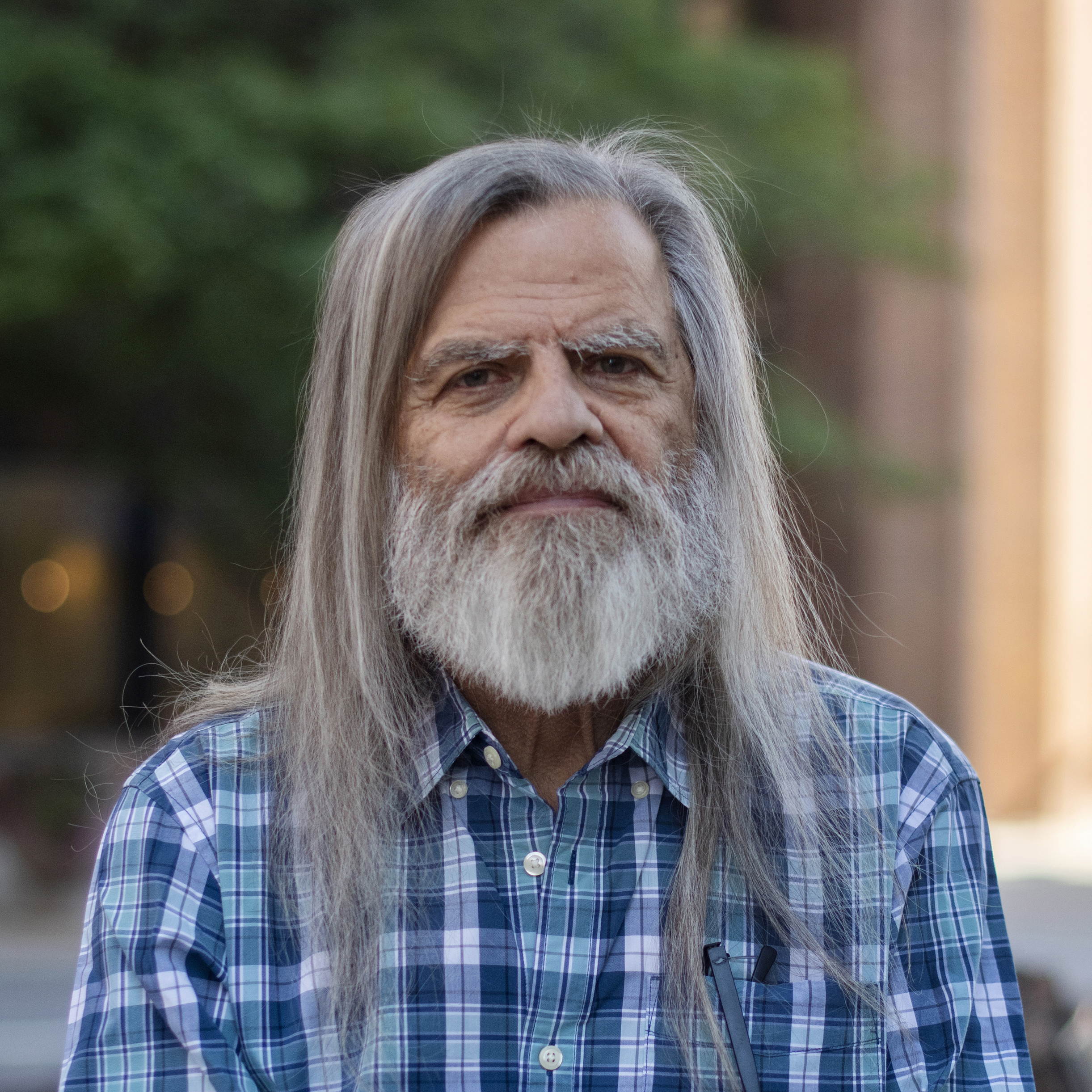
Mike Littwin has been a columnist for too many years to count. He has covered Dr. J, four presidential inaugurations, six national conventions and countless brain-numbing speeches in the New Hampshire and Iowa snow. Sign up for Mike’s newsletter.
The Colorado Sun is a nonpartisan news organization, and the opinions of columnists and editorial writers do not reflect the opinions of the newsroom. Read our ethics policy for more on The Sun’s opinion policy. Learn how to submit a column. Reach the opinion editor at opinion@coloradosun.com.
Follow Colorado Sun Opinion on Facebook.