


COLORADO SPRINGS — Colorado invasive species experts have confirmed the Colorado River is positive for highly invasive zebra mussels after finding larvae in the river on three different dates.
Colorado Parks and Wildlife declared the river “suspect” for zebra mussels after initial positive samples were found in early July. Officials have ramped up efforts to test waters for the species, decontaminate watercraft and educate the public while searching for the source of the fast-producing mussels.
“We want to know where these are coming from and how far they have spread here in the state because that is going to influence our long-term planning,” Robert Walters, CPW invasive species program manager, said Wednesday while updating legislators during a Water Resources and Agriculture Review Committee meeting in Colorado Springs.
Zebra mussels, and a close relative quagga mussels, are the most costly invasive species in the United States and the highest priority in the state’s invasive species program.
A single female zebra mussel can produce 1 million juveniles in a year. Well-established populations can slow or even stop the flow of water to homes, farms and power plants. Lake Powell, a key reservoir for the 40 million people that depend on the Colorado River, has been infested with invasive mussels since 2012.
One adult zebra mussel — about the size of a thumbnail — can filter up to one liter of water per day, consuming plankton and depriving native species of food, Walters said.
“When we start talking about millions if not billions of zebra mussels in a given body of water, they are significantly stripping out the plankton,” he said, “which can ultimately lead to the collapse of things such as our sport fisheries.”
Confirmed larvae in the Colorado River
In 2022, Colorado had its first detection of an adult zebra mussel at Highline Lake, a reservoir northwest of Grand Junction that stores irrigation water and is connected to the 55-mile Government Highline Canal.
The canal intersects with the Colorado River northeast of Palisade, where a red-roofed roller dam next to Interstate 70 diverts the river’s water and delivers it to farmers and ranchers in the Grand Valley.
Staff first found zebra mussel larvae or “veligers” in two samples taken from the Government Highline Canal on July 1 and declared the canal suspect for the invasive species. On July 8, they found another positive sample and now consider the canal to be positive.

Officials called the news devastating and heartbreaking in a July press release from the Grand Valley Water Users Association.
Also on July 8, state staff collected a positive larvae sample from the Beavertail Mountain Tunnel pull-off on the Colorado River and a second positive sample from the canal diversion. Since then, they found two additional positive samples, one at the Blue Heron Boat Ramp in Grand Junction (downstream from the dam) on July 14 and again at the Beavertail pull-off July 15.
Only larvae, no adults, have been found in the Colorado River or the canal.
“With three different sampling dates that came back positive, we now consider the Colorado River to be positive for the presence of these zebra mussel veligers,” he told legislators Wednesday.
Since confirming the zebra mussel larvae, Colorado Parks and Wildlife has been out every week monitoring the river and has taken a total of 270 samples. They have had zero positive detections since July, marking a very low density of veligers, Walters said.
Officials have also contacted 164 outfitters in Colorado and spoken with more than 3,000 people using the river as part of their public education efforts.
Statewide monitoring efforts ramping up
The state’s focus is on early detection, Walter said.
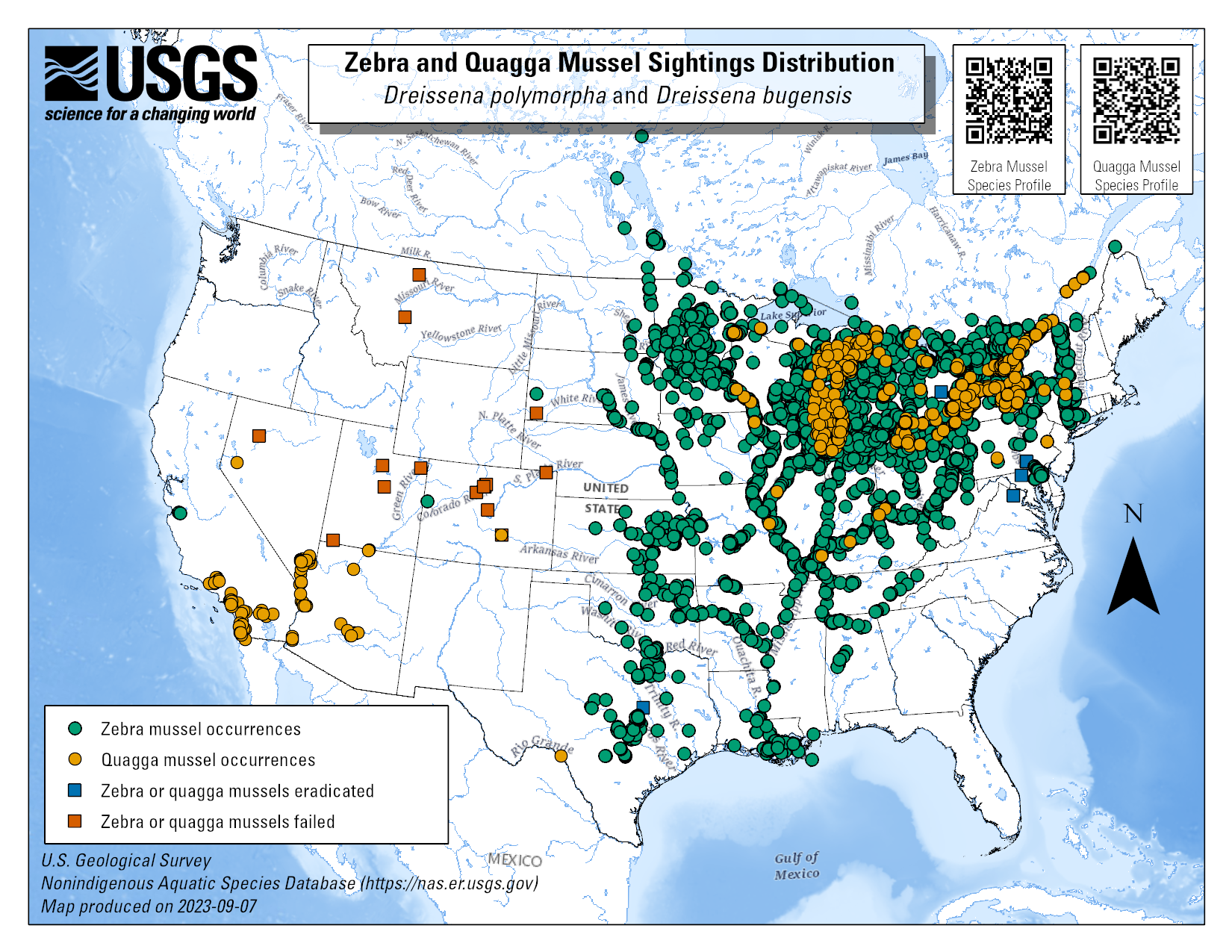
The vast majority of waters in Colorado are suitable habitat for these invasive mussels. Zebra mussels have also been found in Green Mountain Reservoir. Several reservoirs have been delisted after several years of negative testing, including Grand Lake, Lake Granby, Shadow Mountain Reservoir, which help deliver Colorado River water from the Western Slope to Front Range communities.
Once adult populations are established, eradication is nearly impossible and can cost millions of dollars.
There are already well-established populations in eastern waterways like the Mississippi River and Lower Arkansas and just a few successful eradications. The state’s efforts at Highline Lake are one of the more recent attempts, Walters said.
The state had planned to drain Highline Lake, north of Loma near the Utah border, this year in an attempt to fight the mussels’ spread, but now must reevaluate.
“It is really, really difficult to remove these, so we want to do everything we can to keep them out in the first place,” Walters said.
Colorado has one of the largest detection programs in the country with 77 inspection sites and performs over 500,000 inspections annually. It spent $5.8 million in fiscal year 2022-2023 on its invasive species program, which began in 2008.
In 2021, legislators authorized more robust check stations along roads, mainly at ports of entry. The inspection program has intercepted 35 boats “fouled” by mussels at the Loma port of entry and two boats at the Trinidad port of entry.
“We are seeing a significant reduction of mussel-fouled boats showing up at lakes and reservoirs because they are being intercepted right there at the port of entry,” Walters said.
It is illegal to possess or cause invasive aquatic species to be released in Colorado, under a 2008 law, and boaters can face fines if they skip inspection stations during operating hours.
What can boaters and floaters do to help?
People with motorized watercraft and trailers should comply with state inspection laws.
Boaters can also feel the sides of their equipment for signs of juvenile zebra mussels, called settlers, which feel like sandpaper that is difficult to remove when they attach to surfaces.
Equipment has to stay in the water for a long time for mussels to attach. Boat slips and moored boats in marinas are at the highest risk.
Most users are nonmotorized boaters, like people using paddleboards, Walters said. They’re exempt from mandatory inspection because they pose less risk than trailers and watercraft.
Low risk does not mean no risk, Walters said. People should clean, drain and completely dry their gear after each use and before entering a body of water.
If people see a possible sign of zebra mussels, they should let Colorado Parks and Wildlife know, Walters said.
On Wednesday, legislators asked what more the state could do during the water and agriculture meeting, held at the Colorado Water Congress’ summer conference.
“What I’m hearing is there really isn’t a treatment option. … When you catch these veligers early, what more can you do than continued monitoring?” said Rep. Karen McCormick of Longmont.
The key will be to find the source of the zebra mussels, Walters said. If they’re in a small pond, there’s a different arsenal of tools than if they’re in an open water system like the Colorado River.
“Until we really know the source of this population, it is really, really difficult to speculate on water control options that we need,” he said.
Sen. Jeff Bridges of Glenwood Springs asked about innovations, like genetic modification, in controlling the populations.
Researchers are looking into ways to introduce sterile mussels or create something like a cancer to impact its populations, but testing research in natural environments without harming the existing ecosystem is a significant challenge, Walters said.
“At this point, I think it’s important to recognize that this issue is far too large and widespread for CPW to manage this alone,” Walters said. “This is very much a partnership effort.”