
In early August, Colorado Parks and Wildlife killed a yearling wolf from the One Ear Pack in Grand County, the second yearling lethally removed in less than two months. That should force Colorado to ask a hard question: Are we fostering an environment for wolves and ranching communities to thrive together, or are we intervening only after conflict has already escalated, then casting wolves and ranchers as the problem?
The agency calls what happened a “lethal removal.” The broader word we reach for is “management.” I want to push back on both, because words shape what the public believes is happening on the ground.
Management implies a system working as designed professionals making measured moves inside a plan that is on track. What is actually happening is that a state that spent years and millions of dollars restoring wolves is now killing the wolves born of that investment, because the conflict-prevention systems around those wolves were never built to the scale the job requires.
That is not management. That is the failure of management, arriving on schedule.
Let me be clear: This is not an argument against ranchers. The loss of livestock is serious, and ranchers should not be expected to carry the financial, emotional or operational costs of wolf restoration alone. The producers used range riders, human presence and deterrents before this wolf was killed.
They did what was asked of them with the tools they were given. But what tools matter less than how they are used. Deploying nonlethals in this manner does not add up to a comprehensive conflict-prevention program, and when the program fails, it is the rancher and the wolf who pay for it, never the system itself.
Consider what this killing actually solved. The terrain, the timing of the grazing season, the location of carcasses, the vulnerability of the herds, the hardships of ranching, none of it changed. Another wolf will read that landscape exactly the way this one did, because wolves respond to conditions of their environment.
Meanwhile, a pack raising pups this summer has lost a member, and disrupted packs do not become more predictable; they become less so. When we kill a wolf and change nothing else, we are not solving conflict. We are choosing conflict.
I have worked with wolves for more than 24 years. For the past 14, I have worked directly with livestock producers to prevent conflict rather than react to it. Developing programs that help producers and wolves move past the subpar construct of “coexistence” into a realm of co-thriving.
Through my nonprofit, Project GRIPH (Guarding the Respective Interests of Predators and Humans), we have demonstrated that this work does not have to cast ranchers as opponents of wolves, or wolves as problems to eliminate. Across the West, I have seen what prevention actually requires: sustained presence, site-specific planning, attentive livestock management, rapid communication and the flexibility to respond as conditions change.
Range riding cannot be an occasional intervention or a box checked after wolves arrive. It must be adequately funded, professionally led and fully integrated into ranch operations throughout the season. That is not idealism. It is a working model, season after season, in country where wolves and cattle share the same ground.
This young wolf was born in Colorado. He existed because Coloradans voted to bring wolves back. His death is more than another management action; it is a warning that reintroduction alone is not recovery.
Releasing wolves into Colorado was the easy part. Building the human systems that let them stay alive is the actual work, and it is the part Colorado has underfunded and underplanned from the start. Wolves losing their lives and ranchers’ livelihoods hanging in the balance is not a bump in the road. It is the road we are currently on.
Colorado still has the opportunity to become a national leader in wolf-livestock conflict prevention. That will require honesty about what “lethal removal” really represents, and it will require moving beyond reactive cycles of loss, blame and killing toward long-term investment in prevention, built with ranchers, before the next calf or the next wolf dies. There is a better way. Colorado has simply not committed to it yet.
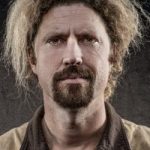
Daniel Curry, of eastern Washington, is a range rider and the founder of Project GRIPH (Guarding the Respective Interests of Predators and Humans), a nonprofit that works with ranchers across the West to prevent wolf-livestock conflict.
The Colorado Sun is a nonpartisan news organization, and the opinions of columnists and editorial writers do not reflect the opinions of the newsroom. Read our ethics policy for more on The Sun’s opinion policy. Learn how to submit a column. Reach the opinion editor at opinion@coloradosun.com.
Follow Colorado Sun Opinion on Facebook.