
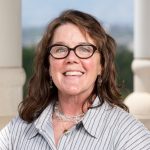

After a failed attempt at getting two of three candidates he appointed to the Colorado Parks and Wildlife Commission confirmed in April, Gov. Jared Polis is trying again — appointing a fly-fishing entrepreneur and conservationist, a big-game hunting veterinarian and a researcher studying human-wildlife coexistence.
The three will be active commission members with voting authority prior to their confirmation hearings in July 2027.
Rebecca Niemiec is an associate professor in the Department of Human Dimensions of Natural Resources at Colorado State University’s Warner College of Natural Resources. Director of the Human Animal Policy Center in Fort Collins, Niemiec researches public perspectives on wildlife management, human-wildlife coexistence and conservation policy. Her research has resulted in more than 30 peer-reviewed publications and $2.5 million in grant funding. She served in the Colorado Department of Agriculture as manager of the Bureau of Animal Protection, which conducts complex animal cruelty investigations involving livestock and companion animals. She was appointed to the commission’s member-at-large position, replacing John Emerick, a retired professor of environmental biology and a leading voice in wetland ecology.
John Le Coq is a professional photographer, founder of the outdoor gear companies Case Logic and Fishpond, and owner of the 400-acre Otter Creek Ranch near Silverthorne. He sits on multiple conservation boards including the Woodwell Climate Research Center, a climate change think tank based in Woods Hole, Massachusetts and The Nature Conservancy Colorado chapter. And he’s co-founder of Science on the Fly, which uses citizen science to collect river water data that informs climate research and policy. He replaces Eden Vardy as the production agriculture representative.

Peter Maguire is a board-certified veterinary neurologist, founder of SpecialtyVetCare in Grand Junction, and an active hunter and angler appointed to represent the sporting community on the commission. He replaces Murphy Robinson, who resigned from the commission in November, and Chris Sichko, whom Polis attempted to appoint to Robinson’s position in April.
On April 22, the state Senate Agriculture and Natural Resources Committee voted 5-2 against recommending Emerick, a retired professor of environmental biology and a leading voice in wetland ecology, to the commission. Members also voted 4-3 against recommending Sichko, a small-game bowhunter, angler and former U.S. Department of Agriculture research economist from Boulder. (They voted 7-0 to recommend fly-fishing outfitter Frances Silva Blayney, who was confirmed two days later.)
Emerick and Sichko resigned just before a final Senate vote April 24. Their nominations had faltered over a lack of confidence from the state’s hunting and fishing community to represent its interests and a belief among some sportspeople that Polis was trying to stack the commission with people pushing an agenda tilted toward conservation and animal rights.
The Senate hearings were so contentious that conservation groups like the Colorado Nature League said they threatened to stop other candidates from stepping up to fill the commission’s volunteer positions in the future.
State Sen. Dylan Roberts, D-Frisco, committee chair, recommended against confirming Emerick based on his history of animal rights activism, his failure to recall a controversial petition to ban mountain lion hunting that he said “he had or had not signed” and the “clear attempt” by Polis “to move the commission in a direction” that favors animal rights over hunting, he said.
Roberts also nixed Sichko after learning he had never hunted big game — even though state statutes only require a commissioner in the sportspersons seat to have held a valid Colorado hunting or fishing license for at least three consecutive years and Sichko had hunted small game and birds.
New appointees drawing same mixed reviews
The new appointees are drawing some of the same criticism from hunting groups as their predecessors did.
“Given the previous appointments, it’s no surprise that the governor continues to select the type of individuals that he has,” said Dan Gates, executive director of Coloradans for Responsible Wildlife Management, which fights “ballot box biology,” the process of making wildlife management and conservation decisions via public ballot initiatives rather than by scientific expertise. “We expected as much, especially with the community putting up a successful opposition to the last rounds of confirmations.”
But conservation groups are cheering Niemiec, who Michael Saul, Rockies and Plains program director at Defenders of Wildlife, called “a world-renowned expert on the science of how human societies and animals interact.”
“Colorado will be extraordinarily fortunate to have her rigorous scientific expertise helping inform the future of wildlife management in our state,” she said.
They also praised Le Coq, who Kara Armano, southwest region spokesperson for Trout Unlimited, said “is dedicated to the work he does no matter the issue.”
“He has big ideas that ripple to those around him, which now include the fortunate wildlife of Colorado,” Armano said.

Eric Washburn, a senior policy analyst behind a petition that would require CPW regulations, management plans, policies and rulemaking decisions to be grounded in the best available science, said he doesn’t know Maguire, “but his resume speaks for itself. He is a passionate hunter and angler as well as being a highly educated veterinarian neurologist. I expect him to be an intelligent, thoughtful, and effective proponent of science-based wildlife conservation.”
All three of the new appointments “demonstrate the need to ensure that agencies reflect growing public support for wildlife management guided by ecological and ethical concerns,” said Mark Surls, Colorado and Northern Rockies coordinator for the advocacy group Project Coyote.
“The governor has continued to appoint commissioners with diverse values and backgrounds, which will help ensure that Colorado’s wildlife will be managed in the interests of all Coloradans, including, but not exclusively, the hunting community.”
Niemiec: “Coexistence should not be controversial”
Niemiec is well known among conservation groups.
In September, she spoke at one of first gentleman Marlon Reis’ Conservation Conversations held regularly at the Boettcher Mansion in Denver. Her topic: coexistence between predators and humans, which she has been studying since 2018. Niemiec in 2019 cofounded CSU’s Center for Human Carnivore Coexistence, which conducts research, outreach and education to support regions that have sustainable carnivore populations and thriving human populations with minimal conflict.
“One thing I want to say is that … the word coexistence has been controversial,” she told the audience at the presentation. “But this should not be controversial. I think we can all agree that we should strive for coexistence.”
“When things become politicized, people are no longer relying on facts and data,” she added. “They’re relying on the heuristics (mental shortcuts that help people make quick decisions with minimal effort) of their political party and their social identity to make decisions.”
“We need real, big reconciliation among rural and urban stakeholders.”
Niemiec told The Colorado Sun she feels “perfectly equipped” to fill the at-large position, because her expertise is “in large part focused on understanding the at-large public’s values and goals for wildlife management.”
“I believe that the public’s values must be included in wildlife management,” she added, “as wildlife is a public resource for all, but also the perspectives of those living with wildlife are critical, as they are having to manage human-wildlife conflict in their everyday lives.”
Le Coq: “We can balance agriculture interests and native species”
Le Coq said this isn’t the first time a governor has asked him to join the CPW commission. Former Gov. Bill Ritter, who led the state from 2007 to 2011, considered nominating Le Coq as a commissioner, but the entrepreneur said he was too busy running his businesses to accept.
He also owns the 432-acre Otter Creek Ranch in the Blue River Valley near Silverthorne and has leased ranchland to cattle ranchers for decades.
Colorado statutes say agriculture representatives on the CPW commission must be actively involved in production agriculture as owners or lessees of agricultural property. They must be owners or partial owners of the commodities produced on that land, and they must demonstrate reasonable knowledge of wildlife issues. Some hunting groups have questioned whether Le Coq fills all these requirements.
But Polis’ office says he does.
Le Coq grew up hunting and fishing in Colorado, which together with his ranching experience, helps him “balance out” agriculture interests and species conservation, he said.
“But I truly believe we need native species like wolves on the land, and as the production agriculture representative, I think I can help educate disparate points of view on the issue.”

Maguire: Sharing hunting passion “is something else”
Maguire declined an interview with The Sun, saying CPW told him not to comment.
Instead he emailed a short story he wrote about an experience he had assisting two men on the same day while on an elk hunt.
The story described a 70-year-old with throat cancer and a disabled Army veteran, who Maguire and his brother-in-law helped after the other hunters had filled their elk tags. The message it conveyed said more about Maguire’s service to others. But the final paragraph illustrated his connection to hunting.
“I killed my cow elk on the last day of the season; altogether we packed/retrieved 3 and took home one,” the email said. “Helping these fellow hunters is what made the hunt one of my most memorable. Having a passion for hunting is one thing, sharing the passion is something else.”
Jen Clanahan, executive director of the Colorado Nature League and its affiliate, Colorado Nature Action, said “Polis has clearly found individuals who not only meet all statutory requirements but also excel in their respective fields. Their personal experiences will undoubtedly bring valuable input to commission discussions on protecting Colorado’s parks and wildlife.”
Polis also re-appointed Gabriel Otero as a sportspersons representative and Rich Reading as member at-large on the commission. Both will face confirmations again, in 2027. Otero and Reading have served on the commission since 2022.