

Wildfires in Colorado can burn thousands of acres, destroy hundreds of homes and leave long-lasting negative impacts on large swaths of natural space. But one organization is helping to fight back with something as small as a pine cone.
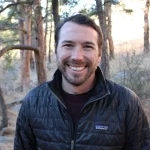
“We focus on collecting ponderosa pine cones to reforest areas of the Cache la Poudre River watershed that have been burnt by high-severity wildfires over the past 10 to 15 years,” said Megan Maiolo-Heath, the communications, outreach and marketing manager for Coalition for the Poudre River Watershed, or CPRW.
The organization works alongside landowners, public agencies, water providers, and nonprofit organizations to handle challenges impacting the watershed and the surrounding area and protect and improve the health of the Poudre River watershed.
Studies show that maintaining healthy forests is crucial for the success of a watershed. Trees act as a natural water filtration system, help prevent erosion, and regulate water flow.
To accomplish its reforestation efforts, CPRW’s next volunteer event will focus on gathering ponderosa pine cones. The species covers large areas of land throughout the river’s watershed, but many of these trees have fallen victim to recent wildfires. Reforestation efforts are essential.
The work is focused on two areas of the Poudre Canyon impacted by wildfires. One is the High Park fire in 2012, which over about 10 days burned more than 87,000 acres and destroyed 259 homes west of Fort Collins.
The other fire of focus is the Cameron Peak fire from 2020. It burned twice as much land and destroyed as many as 492 structures. According to CPRW, the fire burned along the watershed and impacted 596 miles of streams that are part of the Poudre’s watershed.

On Sept. 12, CPRW is asking volunteers to help gather pine cones in prescouted areas where trees have been identified as those that could help rebuild the forest.
“It’s a relatively simple and nice way to kind of be outside and, while at the same time, connecting with your community and helping to heal the land,” Maiolo-Heath said.
The process involves finding healthy pine cones still on trees. Volunteers will cut the branches and gently remove the cones with a twist. From there, the pine cones are put into burlap sacks before heading to local tree nurseries where the seeds will be used to grow seedlings. Once the trees are strong enough, they will be planted next year in areas in need of reforestation.
Overall, the process takes about eight to 12 months. Organizers have limited windows to plant the new trees. That work is done in late April and early May after the cold weather moves out and before the summer. Work resumes in September and can last into early October.
This year, CPRW is gathering seeds from around elevation levels of 6,300 to 6,500 feet. The seedlings will then be planted about 500 feet higher next year to account for climate change, as warmer, drier temperatures make their way to higher elevations.
Even though ponderosa pines are found throughout the Western states, Maiolo-Heath says it’s critical to find local seeds to make CPRW’s work successful.
“It ensures that trees are genetically adapted to the specific climate and soil and ecological conditions of the area,” she said. “So we know that for long-term success of these reforestation projects and for higher survival rates, you want to plant local seed.”
The work by the CPRW is part of an overall effort to help reforest the West. Climate change has brought more destructive fires to states like Colorado, Washington and California. Keeping up with reforestation has become challenging.
“The main reason that this work is so important is because the West has a seed shortage and really needs to increase our seed collection and seed supply,” Maiolo-Heath said. “In fact, there’s currently about 3.8 million acre gap between the post-fire needs and post -fire planting capacity, and that gap is only increasing since the early 2000s.”
The volunteer event on Sept. 12 runs from 9 a.m. to 1 p.m. at Horsetooth Mountain Open Space, 6550 W. County Road 38E west of Fort Collins. Volunteers should wear thick pants and closed toe shoes or boots. CPRW will provide the safety equipment and tools needed to gather the pine cones. You can learn more or register here.