
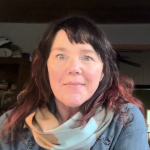

Ben Clark wouldn’t say he was dumb before, just uninformed.
He was a world-class athlete and filmmaker, running, climbing and skiing the longest trails and biggest mountains across the planet. Everest today. Africa tomorrow. Make a movie. Move on to the next project.
Then the pandemic hit and the former publisher of the Telluride Daily Planet, a global ambassador for Osprey packs, the host of a Plum TV show called Fresh Tracks and an ultramarathoner with a penchant for 100-milers, got stuck in the United States in need of a project. And he found one that changed his relationship with the medium for all this stuff: nature.
He was wrapping a film series called Run Around the World where he took pro athletes like Jason Schlarb on little jaunts in Argentina, Oman and China. When the borders closed, he had one episode left and thought it was a throwaway. Maybe so, if a friend hadn’t told him about “a beautiful and amazing piece of land” that turned out to be a “huge sleeping giant of a story” just south of the Colorado border.
It was Vermejo, Ted Turner’s private ranch turned national park — 558,000 acres of protected land where “rarely seen animal behaviors unfold.” Or at least that’s what Clark’s latest feature-length documentary claims. It’s called “Preserved” and it plays at The Oriental Theater in Denver on Wednesday.
Clark wasn’t convinced Vermejo was anything special in the beginning; he just thought, “OK, I’ll take this somewhat seriously. But New Mexico, really?”

Apparently, he hadn’t heard about places like the Gila National Forest, home to the world’s first designated wilderness area, or Carlsbad Caverns National Park, with underground caves full of cotton-soft crystal formations.
Turner bought the property in 1996, transforming it from a landscape scarred by mining, logging and overgrazing into a model for conservation. He’s since restored 60 miles of streams and 18 lakes for Rio Grande cutthroat trout, fostered diverse species like the black-footed ferret and Mexican gray wolf and built a “genetically unique” bison herd free of bovine mitochondrial DNA. “Rich in discovery and layered with human history, Vermejo stands as the pinnacle of conservation in the U.S. — and a bellwether for what’s possible elsewhere,” promotional materials for “Preserved” say.
When Clark went to visit, “just for a weekend, just to scout it out,” he said, “holy crap. This is insane. Just the human history and the natural history.” So he brought his last batch of running celebrities there and “they were, like, Ben. I don’t care about the running. I just want to learn.”
Clark said he “felt really naive and a little bit of shame about being a person who had worked in the outdoors for my entire adult life but never got that book or video or lecture that really explained ecology to me in any way that would stick. I’d been watching all these characters transform in nature, and I’d been subject of a character transforming in nature, but I didn’t know anything about nature.”
Then he thought “well, there’s a lot of other people who probably feel the same way.”
So he did what curious filmmakers do: asked Vermejo if he could essentially embed there with his small filmmaking team of himself, his wife, Mary Anne Potts, who wrote and executive produced “Preserved,” and cinematographer Devon Balet. And that’s what they did over 130 days between 2021 and 2024.

Vermejo is home to endangered species as well as normal old everyday species. Clark said on any given day, given the season, you could see a black bear, a mountain lion, a herd of pronghorn and a herd of mule deer. Or if you’re lucky you can see a black bear fighting a mountain lion over freshly killed fresh deer. Or, if you’re a hunter, you can try your own luck at killing your own ungulate, including a trophy elk with enormous antlers.
But one thing you probably won’t see on the 920-square-mile property are other people. Clark says Vermejo caps occupancy in a central lodge that looks like a Gatsby mansion made of stone and a few smaller stone buildings at 69 people per night. Around 25 employees work on the property, including 20 in ranch operations like road and building maintenance, guest services and some agriculture, and five dedicated to natural resources, including wildlife management.
That experience comes at a cost, however: A single night in a guest room in the Turner Lodge currently runs around $1,200 with meals and activities included, while a minimum two-night stay in the Costilla Fishing Lodge is priced at $26,000 with the same goodies included. But Clark says all of that money goes back into conservation.
“There’s no endowment. This has to be a fully self-sustaining, sustainable ranch and that is how they balance it out. They’re doing the best they can, and they’re continuing to push these things down the road, but you know, they do not want more human pressure.”

That leaves people who can’t afford the Gatsbyesque prices out of luck. But Clark adds “17 of the 50 U.S. states are less than 10% public land, so there’s a huge model in the East of how people have had to do things on private land in order for there to be any health in the ecosystem.
“And what we really have to look at is all this land in between public land (out West), which is generally where all the wildlife goes in the winter and certainly where they go during a lot of the hunting season.”
That land is often on private ranches.
And Clark hopes “Preserved” will show the value of those places, and of doing conservation on those places, in the hopes of starting “more productive conversations with landowners and trying to engage them in either what their restoration efforts could be or are or might be.” Just like he hopes viewers will see that “from a fun standpoint, not from a, like, eat your broccoli standpoint,” learning about ecology and ecosystems and conservation can be great.
“Preserved:” The film will be screened Jan. 14 at 7 p.m. The Oriental in Denver, followed by a special musical performance and live panel discussion with author Craig Childs and others. The film tour will take a break before returning to Colorado in the spring.