
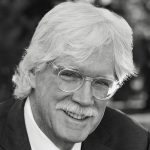

In early 1997 I received a phone call that was to change my life. A woman named Karen Schaeffer called me saying that she was interested in producing a network television show featuring a twenty-four hour emergency veterinary hospital, that they would be shooting in Denver, and that our hospital might just be a perfect fit. She said she worked for a local production company, Rocket Pictures/High Noon, and they would be producing the veterinary series for a new network, Animal Planet, featuring “all animals, all the time.”
Along with several other Denver comics, I had heard about this “all-animal” programming being spun out of the Discovery Channel. In fact, at the time of Karen Schaeffer’s phone call, my comedian friend Todd Jordan and I were working on several animal comedy show ideas to pitch to the new network. This was during the first bloom of “reality” type TV shows where the episodes were less expensive to produce since no writers needed to be hired and the shows basically told themselves. All that was required was a camera.
UNDERWRITTEN BY

Each week, The Colorado Sun and Colorado Humanities & Center For The Book feature an excerpt from a Colorado book and an interview with the author. Explore the SunLit archives at coloradosun.com/sunlit.
I knew Jim Berger, the President and Founder of Rocket Pictures/High Noon. He had come up through Denver network news shows and made a name for himself and had an Emmy for his wonderful production, “How the West was Lost.” This was a poignant depiction of the American West as seen from a Native American point of view and put quite a different perspective on traditional American history.
I was tremendously excited about the possibilities of a show at our hospital. I told my boss, Dr. Robert Taylor, about the phone call. At first he was naturally skeptical, “Cameras behind the walls?”, but to his credit he quickly realized the potential of such a program. He asked me to set up a meeting with Schaeffer and Berger.
At the first meeting it was evident that Berger’s production company had been given the green light to develop such a project by Animal Planet. They already had a name for the show, Emergency Vets. I knew in my heart that our place, the heavy case load, the talented staff, and the technology we offered thanks to Dr. Taylor’s vision, was tailor-made for such a series.
The producers explained that the plan was for a thirty-minute show with a thirteen episode season. Each show would be shot by a three-person crew including a producer, who would decide which cases would be followed; a cameraman; and a sound technician. The crews would come for ten hours a day for seventy days, ten weeks, and from that footage create thirteen thirty-minute episodes.
Jim Berger promised the crews would be “like a fly on the wall,” which for the most part turned out to be true. It seemed to me that Jim Berger and Karen Schaeffer were as excited and anxious as we were. At the end of the meeting, Dr. Taylor stood up and shook hands with Jim Berger and away we went.
“It Started with a Turtle”
>> READ AN INTERVIEW WITH THE AUTHOR
Where to find it:
- Prospector: Search the combined catalogs of 23 Colorado libraries
- Libby: E-books and audio books
- NewPages Guide: List of Colorado independent bookstores
- Bookshop.org: Searchable database of bookstores nationwide

SunLit present new excerpts from some of the best Colorado authors that not only spin engaging narratives but also illuminate who we are as a community. Read more.
That first season was epic and magical. The new all-animal network was embraced by the public in a way rarely seen before. In less than five years, Animal Planet went from ten million homes to ninety-two million homes in the U.S. and nearly one-hundred million more viewers in the rest of the world.
The Animal Planet team was experienced, professional, and formidable. Its leader, Clark Bunting, was a seasoned television veteran and a visionary. He shepherded the fledgling network into one of strength. In a business known for cold-hearted ruthlessness, he is one of the finest people I have ever met.
Susan Morrow ran the talent relations section and took care of everyone from Jeff Corwin, to Mario Lopez, and Steve Irwin the Crocodile Hunter. Susan is kind and detail oriented and there may never have been anyone more organized. Likewise, Rocket Pictures/High Noon put together a team that was equally impressive.
Karen Schaeffer (later Weiser) created the tone for our show that made it distinctive. She had incredible instincts for a story. The cameraman for the first two seasons, the late Bob Brandon, was an industry legend. A prickly Texan with a sweet voice and gentle heart, he was the winner of multiple previous Emmys for his remarkable camera work. If Karen Schaeffer was responsible for the voice and spirit of our show, Bob Brandon invented its look with his camera. The other producers were dedicated and talented. Our doctors were veterinarians and knew nothing about making television. The Rocket Pictures/High Noon crew expertly schooled us. With a crew like this in place we started to film.
We shot nine seasons of Emergency Vets and two more of E-Vets: The Interns. Still, nothing comes close to the special feel of that first couple of seasons. In a way, it was a perfect storm. The chemistry was palpable, the network was new and hot, production was first-rate, and our staff as well at the time was unique.
Dr. Taylor was fatherly, wise, and committed to excellence; Dr. Holly Knor was beautiful and nurturing; Dr. Steve Peterson had movie-star good looks; and my segments were usually included to provide some comic relief to offset the pathos of the other cases. Mine usually included an exotic creature and a happy ending: a constipated turtle, a hedgehog looking for a husband, a little boy with a sick rabbit. The real stars of the show were the animals, their worried families, and the rest of our dedicated staff at Alameda East Veterinary Hospital.
To this day, one thing I remain very proud of is that our show was never staged. You saw things as they happened. It was real life in real time with no second takes. Sometimes it made it difficult. If I were to tell you that I was going to come back in one hour and ask for three reasons you liked your job or the city you lived in you could compose yourself and come up with three pretty solid sound bites for answers.
For our show, the producers would ask about things as they were happening on the fly. “What types of tumors do ferrets get?” as the animal was having cardiac arrest, or “What is the antidote for antifreeze?” while the cat was having a seizure. If you weren’t right in the thick of it, knee-deep in the heat of battle, if they gave you a minute to consider an answer you might be able to put together a cogent and coherent thought. But this was real time. Often I would see a segment later and be sickened at myself thinking, “Is that all I could think to say? Is that the best I could do?” It was humbling.
The show was a tremendous hit. In the beginning all the infant network had was our show and the Crocodile Hunter. It was a whirlwind of an experience. We traveled to New York to be on an animal episode of the Maury Povich Show; we toured the country every summer with the Animal Planet Expo events; when Croc-Hunter Steve Irwin became ill from a spider bite, we were stand-ins on a float in the Macy’s Thanksgiving Day Parade in New York City, and in 2001 I was featured as one of the “50 Most Eligible Bachelors” in People magazine.
Because of our show they used my voice on the train at Denver International Airport and I got to be on an episode of the hilarious “Wait, Wait, Don’t Tell Me” on NPR. It was all very intoxicating. There is something very wrong and incestuous though about watching yourself on television. I never got used to seeing myself on TV. I would think, “That’s not my neck, that’s my dad’s neck!” No one looks like they think they do.

When we started filming I would have told you that when their animal was sick or injured, the majority of people would never let themselves or their pet be filmed, let alone be in a segment on a weekly reality show. In the eleven seasons of our series the vast majority of clients allowed their animal to be featured. Only a small number declined having their pet’s story be followed. Sometimes, though, things would happen that would prevent the case from being shown on network TV. One case in particular comes to mind.
One morning as we started to film, a young couple brought in a tiny Siberian Husky puppy that could be put in any position without him stirring. The dog was about twelve weeks old, a little male, and was completely non-responsive. The young people were college age, hipster types. Both the boy and the girl wore dark glasses in the exam room. I took note of the two kids and turned and examined the puppy closely.
His gum color was nice and pink, he had no enlarged lymph nodes, both his temperature and his heart rate were normal, and there were no outward signs of trauma. His pupils were profoundly dilated and he was dribbling urine. The young man let me know the puppy had been normal the night before, had eaten his dinner, had received his first two vaccines, and presently was on no medication.
I had to ask, “Was there a party at your house last night? Might he have gotten into something?” The sun-glassed pair quickly glanced at each other and seemed to stiffen. I had lived through the sixties, had toured with bands, and I was concerned this puppy might have ingested a drug. This was filmed before marijuana had yet become legal in Colorado.
I pleaded with them, “Look, I am not here to prosecute you, I am here to help this little dog. If I am going to do that you have to level with me.” The boy started nervously, “Well, about 4:00 a.m. we heard someone downstairs in our apartment, playing our stereo, and we think that he may have partied with our dog.”
“Who was he?” I asked incredulously. “Some dude,” the kid replied. “Did you go downstairs?” I inquired. “No, we were awfully tired and didn’t go downstairs,” the young fellow offered. I attempted to summarize his remarks. “Let me get this straight. ‘Some dude’ came in your apartment last night, played your music, and partied with your dog. But you didn’t get up. Is that about it?” The boy nodded.
“Son, that is the damn dumbest story I have ever heard. Care to try again?” By now the cameraman was laughing so hard that when we looked at the footage later it was evident his camera had been shaking up and down. It was the only time a cameraman excused himself and went out into the hall. I could hear him and the sound guy explode in laughter outside the door.
The girl spoke now for the first time from deep behind her shades. “The puppy ate our bag of pot from under the bed.” Now we were getting somewhere! I persuaded the stoner duo to hospitalize the pup for treatment. It is hard to overdose on marijuana, but it has a very long half-life in dogs.
It was too late to make him vomit, but after forty-eight hours of sleep, activated charcoal, intravenous fluids, and close observation the baby husky went home wiggling and happy. Upon his release I had a “Dutch Uncle” talk with the young couple.
I told them, “Your puppy deserves better than getting into your drugs. I should prosecute you, not for marijuana, but for being stupid. This little fella depends on you for good judgement.” I told them that I wanted to see them again in one month for his last round of vaccinations and to make sure they were taking care of him properly. I said if they did not show up I had their address and I would find them.
They obviously cared for their little friend, thanked me profusely, and came back promptly in a month for his last vaccinations. The segment never aired and hit the cutting room floor. At the time, the network would not run stories about drugs. I thought this policy unfortunate because these types of segments could inform the public about the hazards drugs can pose for pets. Still, for years after, every time I would see that cameraman, all I would have to say was, “Some dude came in and partied with our dog!” We would howl and laugh until the tears came.
As a veterinarian, I had little idea of what would make good television. I thought things that would increase public awareness about particular problems would be helpful but the producers found these sorts of topics too dry and dull. They liked drama, trauma and blood-squirting stories. The flashier, the more “gee-whiz” technology, and the more space age medicine the better they liked it.
I knew one thing they liked though. They liked the happy endings. They liked it when the dog or cat had undergone surgery and now was back home playing with or chasing his “bally” or drinking his “milky.”
Animal Planet by this time was in ninety-two million homes in this country and over one-hundred million homes abroad. Our producers would give the people tons of heads-up time that they were coming to film the homecoming at their house. If you knew that your house was going to be featured in nearly two-hundred million homes, do you think that you might pick up a little bit?
No, the places were always a shambles! One time, we went to an old lady’s house to film her cat coming home following surgery. When we arrived at the house, the woman greeted us at the door with curlers in her hair, the old-lady kind with the sponge and the spikes that stick into your head. I didn’t know they still made those things.
The lady explained she was wearing the curlers for an event she was to attend later that morning. I got to thinking. Where is she going after this that more than two-hundred million people are going to see her? Maybe she is singing at the Super Bowl with Garth Brooks or Lady Gaga. You cannot make up things like that.
For me, one of the high points of the show was when Crocodile Hunter Steve Irwin came to our hospital to film a rattlesnake study I had been involved with for a segment of his show, “New Age Vets.” It was shortly before his tragic death.
We had heard a lot about him, we didn’t know what to expect, and we were all very excited about his visit. We need not have worried, he could not have been nicer. He signed autographs for everyone, posed for endless pictures, and passed out Animal Planet t-shirts to our staff.
He could not have been safer with the snakes either. He said, “These are native snakes that you are familiar with, I don’t know them. I will just do the voice over while you work with them.” Which he did. I was deeply saddened when he died. I was saddened in part because he had changed his image and his mission entirely and was becoming increasingly focused on conservation. I am certain that had he lived he would have made a tremendous impact because he touched so many people.
He was charismatic and engaging. Endangered species could have found a real champion in him and his larger than life persona. I only spent an afternoon with him but I could certainly see his deep commitment to animals worldwide. No matter what you thought of him, you could not ignore him, and his devotion to living creatures was genuine. He had an aura.
My Animal Planet experience was remarkable. However, I knew what the reality was, I knew that when the cameras were gone I would still be there doing what I always did, being up front in the exam rooms and taking care of sick animals. Since I didn’t actually watch the show that much it didn’t really affect me dramatically. I knew that I wasn’t a television star but rather a poor but honest veterinarian. I was nothing special and our show simply displayed what thousands of veterinarians worldwide do every day, help sick and injured animals.
Could we have exploited it more or maybe milked the whole experience better for ourselves? Sure, but it was never about that. Our series portrayed veterinary medicine in a positive light. It showed up close and personal what veterinarians had to offer technology-wise and what they could do. It never was about us.
If people recognized me from the show I would take their hand and ask them a few things about themselves. I had stolen that from watching Keith Richards so many years before. He said all that people want is to be acknowledged and talk a little about themselves.
Keith always had the time for them and they invariable left smiling. Keith is just about the coolest cat ever. If he could do that, who was I not to be gracious and humble? I knew that I wasn’t any kind of celebrity, just a local veterinarian.
Keith also always said, “If you think you’re hip, you’re not; and if you don’t, you are!” I knew I wasn’t hip! One time at the Denver airport a little boy about eight years old came up to me and said, “You look like that animal guy from TV.” I smiled at him and said, “Well, little boy, I am.” He said, “You wish!”
The kid knew a big truth. None of us are as cool as we think we are.
Kevin Fitzgerald has practiced veterinary medicine in Denver for over 40 years. He helped pay for his education working for rock promoters and providing security for touring bands. For 11 seasons he was one of the featured veterinarians on Animal Planet’s popular series “Emergency Vets” and “E-Vet Interns.” He is a staple of the Denver comedy scene and has worked with Joan Rivers, Norm McDonald, Kevin Nealon, Kathleen Madigan, Craig Ferguson and George Lopez. His true passion is conservation and he believes that when a species becomes extinct, the world becomes a less interesting place. He lives in Denver with his dog, Mrs. Thompson.
