
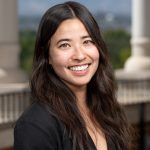

Wildlife artist Kate Fitzpatrick’s animals are all over Colorado. She’s added a starry-winged swan to a business in Fort Collins, painted prairie dogs on a window in Westminster, decked out an Englewood business with a galloping horse and adorned a Boulder wall with a bison.
Some of these works were created during mural festivals, week- or weekend long events where an artist is provided a wall, materials and a stipend to create a mural from start to finish. Mural painting is a longstanding strategy for community building and economic stimulus — the most widespread example is the Works Progress Administration’s Federal Art Program, a New Deal Project begun in 1935 that paid artists $23.50 per week and funded more than 2,500 murals around the country.

Mural festivals, though, didn’t really begin until the 1980s and were again proposed as public works projects, this time as a way to cover up graffiti. Since then, they’ve grown to include concerts, artist talks, artisan markets and a range of events that engage locals with the large-scale painting community as a whole.
Fitzpatrick has always enjoyed attending these festivals — “such fun vibes,” she said — but there was always something that bugged her. Of all the artists and organizers she got to meet, none were part of the deaf community. Fitzpatrick is a child of deaf adults — or CODA — and deaf culture is her culture, she said.
“I know that there are a lot of artists out there who are deaf, who are hard of hearing, who are deaf-blind and who live in Colorado,” Fitzpatrick said. “So why am I not seeing them?”
“I know the answer to that,” she added. “It has to do with access. That prevents new artists from stepping into the mural space.”


LEFT: Muralist Jaye Jones preps her wall at KissFist Mural Fest, Friday, Oct. 17, at Rino ArtPark in Denver. Jones is an artist from Evergreen (Armando Geneyro, Special to The Colorado Sun) RIGHT: Muralist Natalia Popham preps her wall at KissFist Mural Fest, Friday, Oct. 17, at Rino ArtPark in Denver. Popham is a 5th grade teacher in Windsor. (Armando Geneyro, Special to The Colorado Sun)
So one year ago Fitzpatrick decided to launch the KissFist Mural Festival to bring artists from the deaf community together for a weekend in Denver. The name comes from an American Sign Language gesture that shows appreciation or love for something.
The festival took place this weekend at the RiNo Art Park, and featured nine artists, picked from about 30 applicants, two student artists from the Rocky Mountain Deaf School, and the Deaf Artisan Market Day, a Texas-based craft market that centers deaf creators.

The paintings are currently being auctioned, and proceeds will be split 50-50 between the festival and the artists. That’s on top of a $1,000 stipend for the piece, or about $31 per square foot, slightly higher than what Fitzpatrick considers a “solid rate” in the mural world. She’ll keep that rate higher than average, she said, a small way of addressing the inequities deaf people face in the job market.
In Colorado, almost 40% of deaf and hard of hearing people are either unemployed or not in the labor force, compared with 24% of the hearing population. The median income for people in the deaf population is $2,000 lower than the hearing population, and the discrepancy is even higher for deaf women, whose median income in Colorado is $45,000 compared with $51,000 in the hearing population, according to the National Deaf Center of Postsecondary Outcomes.

About half of the artists who attended are professional muralists. The other half painted their first mural.
“I had to have my first mural experience, needed somebody’s trust to be like, go ahead, paint on this wall,” Fitzpatrick said. “So being able to give that experience, that space and without the added access barriers and all of the junk that comes up around that, hopefully it gives artists a chance to see if they even like murals. If they don’t, then they don’t, that’s fine.”
Among the access barriers and “all the junk” that Fitzpatrick hoped to address with her festival are things like having interpreters on-site so artists can converse with the crowd and captioning social media content, actions that Fitzpatrick has requested from previous organizations and been denied. “It’s always someday, someday, someday,” she signed in an Instagram post, expressing her frustration.


LEFT: Ruth Jackson from Bake It With Sass leads an edible mural workshop at KissFist Mural Fest. Jackson is a deaf baker who teaches baking to the deaf community in ASL. Students from all over Denver Public Schools are able to “paint” on white-frosted pieces of cake using food coloring, Friday, Oct. 17, 2025 at Rino ArtPark in Denver. (Armando Geneyro, Special to The Colorado Sun) RIGHT: Students from Denver Public Schools participate in an edible mural workshop at KissFist Mural Fest, Friday, Oct. 17, 2025 at Rino ArtPark in Denver. (Armando Geneyro, Special to The Colorado Sun)
Artists spent three days working on a 4-by-8-foot piece, smaller than the typical canvas at a mural festival (which can stretch over multistory buildings). The approachable size is another way for the festival to accommodate its artists.
“I don’t know where this standard started, but in the mural arts, I find there is this expectation that artists will be pulling incredibly long days that are super physical,” Fitzpatrick said. On her Instagram account she has posted about finishing an 8-by-8-foot mural in 16 hours for the Fraser Mountain Mural Festival. “Now to sleep for approximately one week straight,” she joked.

Nothing against those mural festivals, she added. But the expectation of long hours immediately narrows the pool of participants, elbowing out those with chronic disabilities and caretaking duties. It also creates a time-induced tunnel vision in the artists, which would completely defeat the purpose of KissFist, Fitzpatrick said. The point is to bring these artists together from around the country so that they can interact, share resources and build a community.

“We’ve been getting emails from artists around the world saying, ‘I’ve never met another deaf mural artist,'” Fitzpatrick said. “Imagine a hearing artist saying that! You would never. They’re surrounded by other hearing artists who they can contact. So that’s an opportunity thing, that’s an equity thing that deaf artists are being left out of. So being able to create that is huge.”

When Fitzpatrick was in college she pitched a short film that centered on deaf culture. “Deaf culture?” her professor responded, “what’s next — leprosy culture?”
“There is culture, language, art, and so much more that is specific to the deaf community,” Fitzpatrick said. “This is not a temporary space of people just getting by until medical technology advances to eradicate it. This is a complete, diverse and valuable community that deserves to thrive in every way possible as it is.”