
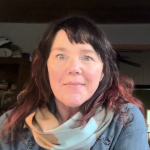

When Emily Murphy’s husband finished his physician’s residency in Fort Collins, he wanted to practice medicine at a community hospital in a rural setting.
Murphy agreed, with one stipulation.
An educator with a project-based learning and restorative-practice background, she wanted to work in a small school with that model. The stars aligned, and Emily found work at Pagosa Peak Open School, a tuition-free charter prioritizing project-based learning to develop “brave and experienced lifelong learners who contribute to our evolving world.”
The Murphys were happy to settle in Pagosa Springs, which has a year-round population of around 1,700 and a median household income of about $80,000.
But you could argue Archuleta County was luckier to have them, because it’s one of many rural counties in Colorado that have struggled to find and retain not only good educators, which Murphy was, but good principals, which she’d later become.
Colorado principals, particularly in rural areas, face the challenge of “wearing many hats,” said Margarita Tovar, chief talent and human resources officer at the Colorado Department of Education. “They have to be an instructional leader. They also may serve as a transportation director or the community liaison. And there are also lower salaries in rural districts, so it makes it very challenging to wear all of these hats effectively.”
One in 10 principals are leaving their job each year, and that has a trickle-down effect on the staying power of teachers, Tovar added. Principal effectiveness also influences teacher turnover, “and when we look at our teaching and learning conditions by annual survey, we see that a strong, stable principal is among the most critical factor in teacher retention,” she said.
But since 2020, the department of education has offered “leadership development pipelines” through various programs to educate and support rural principals. And CSU Global, an online university affiliated with Colorado State University, offers the only 100% online principal licensure program in the state, to help teachers become principals in rural places.
Learning by doing
Like the kids at Pagosa Peak Open School, when Murphy first started, she was learning by doing.
That’s because as the only K-8 school of choice in Archuleta County, Pagosa Peak could design its own curriculum.
Colorado charter schools are free, open to the public and semi-autonomous, meaning they operate under a contract with either a local school district or the Colorado Charter School Institute.
They also generally have more flexibility than traditional public schools in regards to curriculum, fiscal management and overall school operations.
And the department of education says their educational programming may be “more innovative than traditional public schools,” which in Pagosa Peak’s case translates to “intensive hands-on learning with minimal direct instruction,” with the school district “there to kind of support us in moving forward with this unique school choice,” said Murphy.

Before moving to Pagosa, she’d been an instructor in the Human Development and Family Studies Department at CSU where she worked in a lab school with CSU students and preschoolers. That got her wondering what role she wanted to play in education, “because I really loved the idea of working alongside others who wanted to be teachers.”
But at Pagosa Peak, which was only K-3 with 54 students when she started, “we had only myself and the principal as the instructional admin team,” she said. And while doing administrative work to support the principal, she realized “I really didn’t know very much, so it felt like a natural next step for me to try and find a principal licensure program that would support the work I was already doing.”
Helping rural principals
Tovar said some of the concerns the department of education hears from principals in rural areas are “the conditions they’re working under, the stressors they have simply recruiting folks to these areas and the increasing requirements placed on them,” all factors that can lead to them leaving certain schools after three to five years.
“That makes it really hard to have a culture where teachers feel supported along with students and parents,” she added. So the department of education created “leadership development pipelines” focused on a principals’ specific needs, “which could be anything from understanding attendance to more support with literacy or math practices,” she said.
In 2020 the department of education created the Principal Leadership Institute, a two-year program focused on building the “leadership capacity of principals … working in complex, dynamic learning environments…in times of uncertainty.” They’re paired with coaches trained in a “cognitive coaching” framework that prioritizes a principal’s self-directed learning and thinking skills and includes a two-day retreat, site visits, biweekly coaching sessions, regular networking sessions and access to different learning modules.
☀️ READ MORE
The theory is that if principals can build systems that create a sense of collective teacher efficacy and a culture and climate that empowers staff, their retention and satisfaction will increase, and this will have a positive impact on student learning outcomes.
The institute is available to any principal in any school district through a yearly application process. But Tovar said the department also partners with several other Career and Technical Education-authorized principal preparation programs for teachers interested in obtaining their principal license. They include CSU Global, which Murphy said helped her figure out “the administrative and education roles” of principals and identify “some of the things a principal needs to be efficient and effective.”
Expanding school stability
Murphy said one of those things was teacher evaluations, because while the state makes public schools do them, charter schools with the appropriate waivers can opt out of annual reporting to the department of education on their teaching staff’s effectiveness.
Pagosa Peak wanted to create their own unique evaluation, and Murphy’s program helped her identify the major areas to evaluate not only for best practices in teaching, but also best practices in evaluating teaching, she said.

Working with the school’s former principal before doing the program gave her a “leg up” over a “brand new” student who might do it, she added. And the majority of her online assignments had practical application, “so I’d work with a professor to create a family communication template with certain components, or the assignment would be to analyze the needs of your staff. So, how do you create a needs assessment and then how do you plan your professional development based on that?”
Colleen O’Neil, CSU Global program developer, added principal licensure candidates also receive training “to directly address the pressing issue of school safety, including the prevention of and response to school shootings,” like the one at Evergreen High School last week. In an email, she listed the steps principals are taught to take as “identifying the critical elements of an effective school safety plan, developing school-specific safety plans and recognizing and applying proactive communication strategies for conflict resolution,” to empower leaders to intervene early and de-escalate situations before they rise to crisis levels.
Since Murphy came on she says Pagosa Peak has grown from K-3 to K-8 and has doubled in population. They have a playground as well as after-school programming. As far as Colorado’s standard CMAS testing scores go, she said every year they see improvement.
And “we have a lot more stability in our school than when we started.”